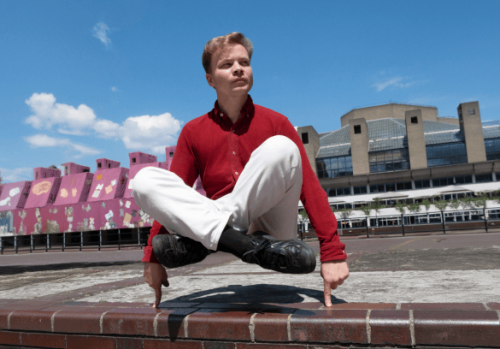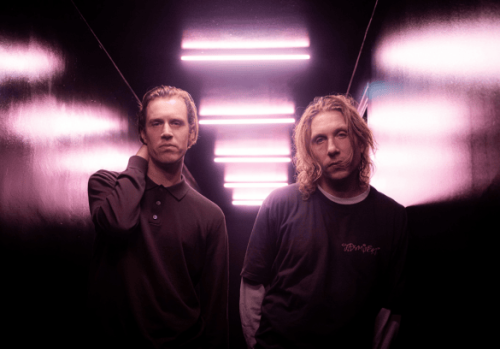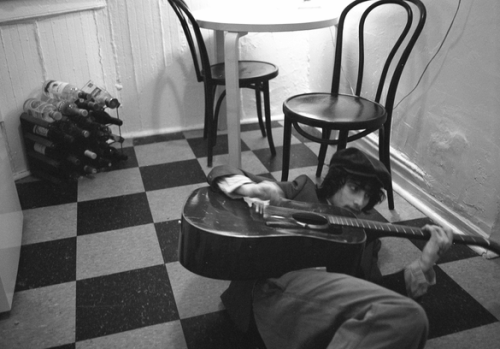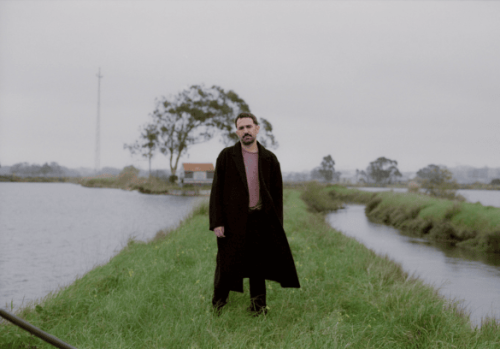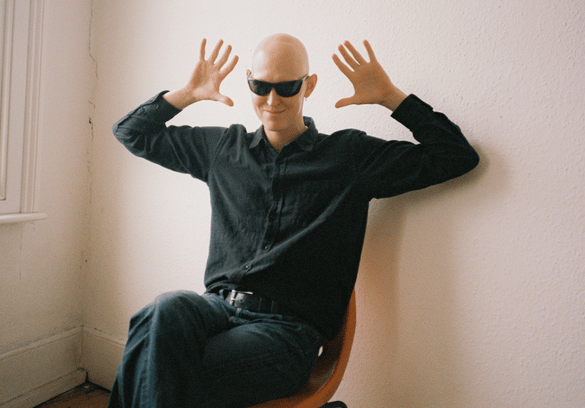
About a year ago, The Guardian visited the Rhythmic Music Conservatory in Copenhagen to get a sense of a place they had only heard mentioned in connection with a number of Danish artists who, while not exactly revolutionizing pop (that story will be told later), have been giving it new meaning this decade: Clarissa Connelly, Smerz, Erika de Casier, ML Buch, and Astrid Sonne. It was there that they discovered and heard GB.
The phenomenon isn’t unique to Denmark; there are also echoes of this in the UK (Joanne Robertson, Mark Williams Lewis, and, of course, Nashpaints). What’s surprising there is the music’s ability to transcend the nostalgia phenomenon and embrace a fresh concept of novelty—a generation distilling the new through the old without the old emerging as the first layer that comes to mind. GB fits this formula; the pop is experimental, never impenetrable, close to the sweetness of an Arthur Russell, yet mellow in a very unique way. His discography includes albums like ‘Gusse Music’ and the masterful ‘Falter’, an instrumental album where the guitar takes center stage—sounding as if Slint were covering Arthur Russell—and he will present his latest work, ‘Herzsprung’, in Lisbon.
Despite the idea of experimentation and a certain boldness, the music feels very familiar. One might associate it with a collective gift or a cultural consciousness: and think of this as a music scene or something intrinsically linked to a school, in this case, the Rhythmic Music Conservatory in Copenhagen. Or to see it as part of a larger trend—that is, not an exclusively Danish phenomenon (because it isn’t), but rather the result of a generation that has learned to filter the pop music they love and reinterpret it in their own way, within today’s context. This explains why the music doesn’t feel nostalgic. The other part comes from—and is also evident in GB’s music when he sings—lyrics that are extremely personal, relatable, and in tune with the malaise of today’s youth. It’s pop of inner protest, wrapped in a beautiful package that hides real pain. The phenomenon isn’t Danish. So far, they’ve just been doing much better than the rest. GB and ‘Herzsprung’ are proof of that right now.
AS


Music
Concerts
Andreu Ubaldo & Kiran Leonard
Thu17.12.2609:00PM
Galeria Zé dos Bois