In between trash and archive, newspaper is perfect for bringing glass windows to a high shine without leaving any residue. Newspaper is lint free. Still, it leaves a trace – you walk away with your fingers darkened and dried from the ink.
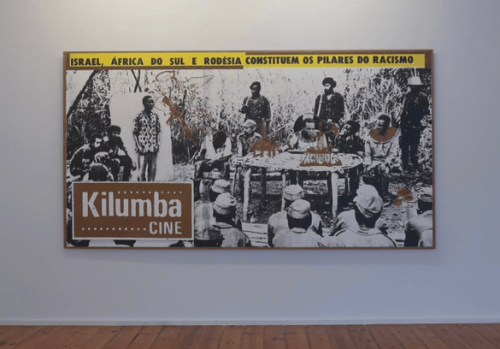
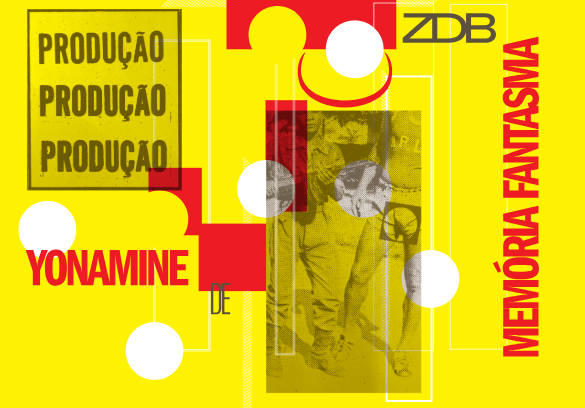
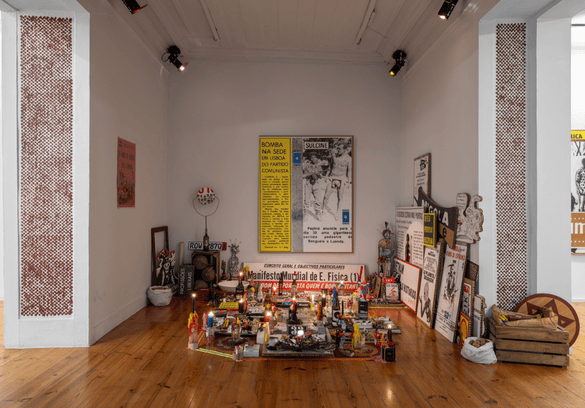
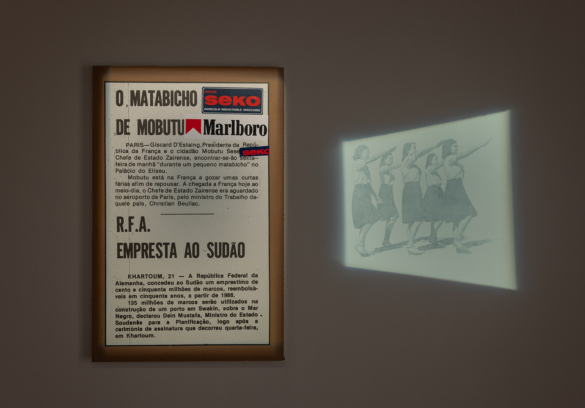
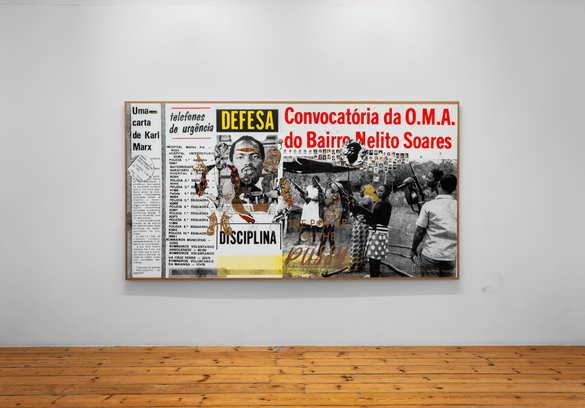
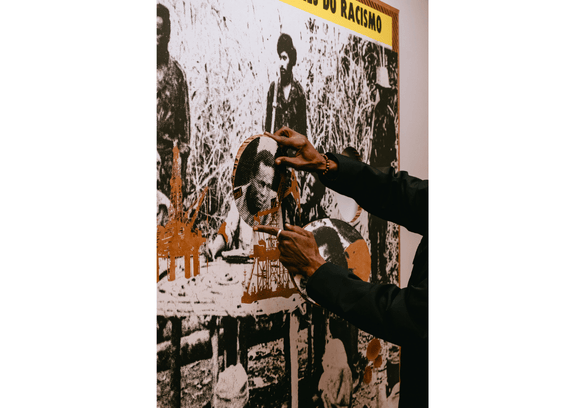
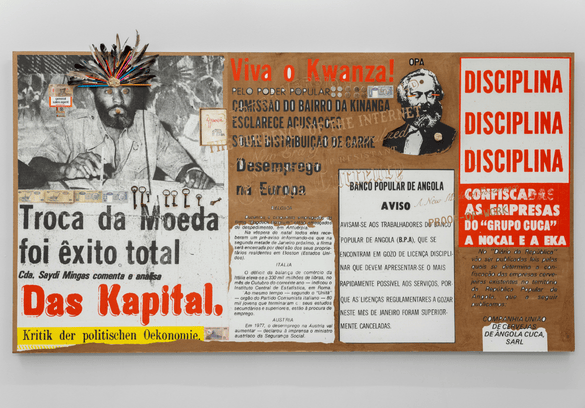
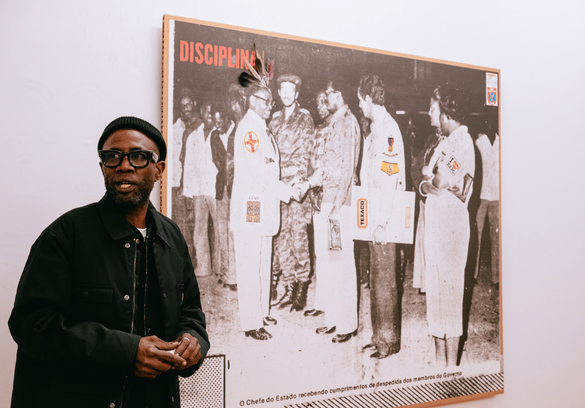
Memória Fantasma finds Yonamine once again with his hands in Angolan memory and in the pages of the state daily, Jornal de Angola, returning to the work he began in 2013. Look for the stutter, listen to the chiaroscuro, black ink on gray paper, black bodies in the foreground, white colonial capitalism still behind them, brown underneath them both. In the current iteration, he does not recuperate but remixes.
Working on cardboard, Yonamine resurfaces the paper, and the past, bringing them back and giving them a new gloss. Memória Fantasma, like the jornal da parede so common in 1975, 1976 in newly independent Angola, sturdies the paper, makes it vertical, gives it a spine. Applying pressure, cutting into the surface, Yonamine makes media into a medium – the medium of his art, the medium that channels spirits. Don’t sweep at night, lest you call up the kalundus, they say in Luanda.
All over the world, we have been sweeping at night. Unsettled spirits possess us. The connection between fascism and colonialism that Aime Cesaire discerned is our daily bread here in the early twenty-first century. Platformed and re-platformed, we consume the images, flame with rage, bristle with fear, have our hearts broken, are sleepless with grief. And it is not just outside us, coming in – corrupt leaders, unfair economic conditions, ecological disaster. We participate. We “accept terms and conditions” with a click, several times a day.
Marissa J. Moorman