Notre musique, Jean-Luc Godard, 2004, France-Switzerland, screening of excerpts lasting
approximately 20 minutes, digital file.
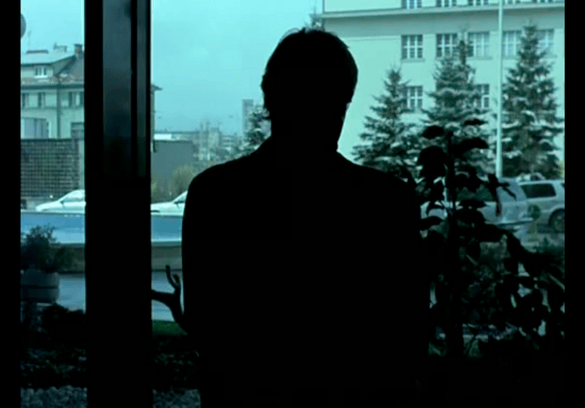
“Three parts, entitled respectively: Kingdom 1 – Hell, Kingdom 2 – Purgatory, Kingdom 3 – Paradise.
‘Hell’ consists of various images of war, in no particular chronological or historical order. The images remain silent, accompanied by four sentences and four pieces of music.
‘Purgatory’ takes place in the present day in the city of Sarajevo, during the European Book Fair. These are conferences or simple conversations about the need of poetry, the image of oneself and the other, Palestine and Israel, etc., between both real and imaginary people. The visit to the Mostar Bridge under reconstruction symbolises the interchangeability between guilt and forgiveness.
‘Paradise’ shows a young woman who, having sacrificed herself, finds peace on a small beach by the sea. The beach is guarded by some US marines.”
In one of the conversations in the film, Mahmoud Darwish says: “I was a child of a people who had not been recognised until then. And I wanted to speak in the name of the absentee, in the name of the Trojan people”.
O, Persecuted, Basma al-Sharif, 2014, Palestine-United Kingdom, 12’, digital file.
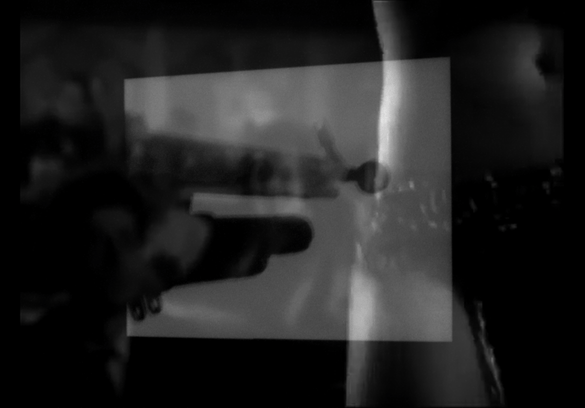
In O, Persecuted, Basma al-Sharif reinvents the modalities of archival reuse, through painting and her own body, to mediate the sounds-images of the short film Our Small Houses, directed by Iraqi filmmaker Kassem Hawal and produced by the Popular Front for the Liberation of Palestine (PFLP) in 1974. Al-Sharif’s film challenges the history and memory of the anti-colonial struggle. It also deconstructs the filmic forms of militant cinema. Hawal’s film archives are contrasted with recent images of beach parties in the territories occupied by Israel. When profaned, these images reveal the alienation and malaise of the coloniser.
UNDR, Kamal Aljafari, 2024, Germany-Palestine, 15’, digital file.
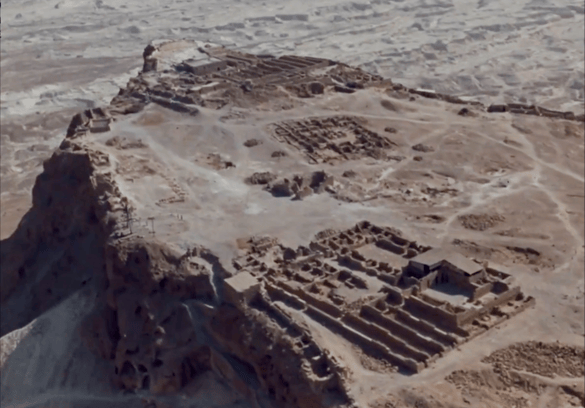
“The camera’s eye returns obsessively to the same places, a vertical perspective that imposes control, the possession of archaeological sites, stones lying for thousands years in the desert. The places it observes, however, are not deserted: we see, as if glimpsed from afar, the peasants working the land, themselves transformed into landscape. Something disturbs the stillness of the place: explosions on land and in the sea prepare the ground for new cities with new names, new forests. This landscape is transformed into a scenography of appropriation.”
Filme dos Outros (Film of Others), Lincoln Péricles, 2014, Brazil, 20’, digital file.
“Over the last decade, Filme dos Outros (2014), by Lincoln Péricles, filmed in Capão Redondo, on the outskirts of São Paulo, has operated from a crystal-clear understanding of how class struggle is imprinted on the materiality of images. Its procedures take as their unequivocal starting point the perception that class society is organised and valued according to its resolution. Made with archives from stolen film apparatuses, Filme dos Outros exposes this “other” from the cameras that each image producer possessed.”
Maria Bogado, Cinética
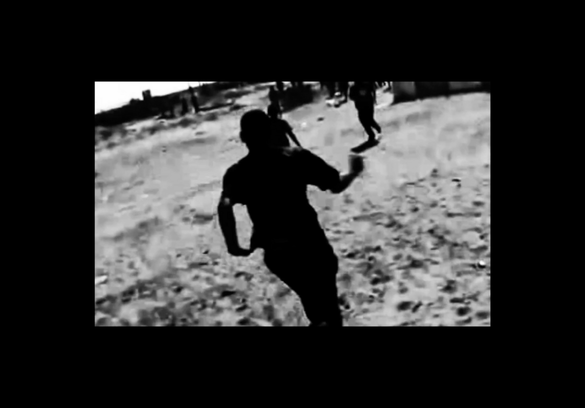
Lincoln Péricles’ film opens with archival footage of the struggle for survival during the 2014 bombing of Gaza. If the prologue points to the continuum of colonial violence in Palestine and reinforces the film’s enunciative system, based on collective assemblages, these “poor” images — filmed, like today’s, by the Palestinian population — simultaneously operate as a counterpoint to the other sequences, inscribing the film and its démarche in a whole gest of political resistance.