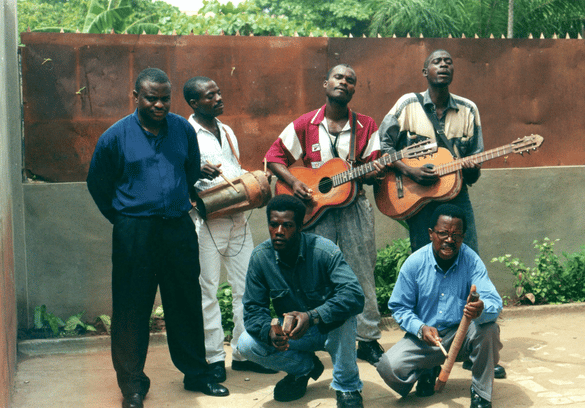
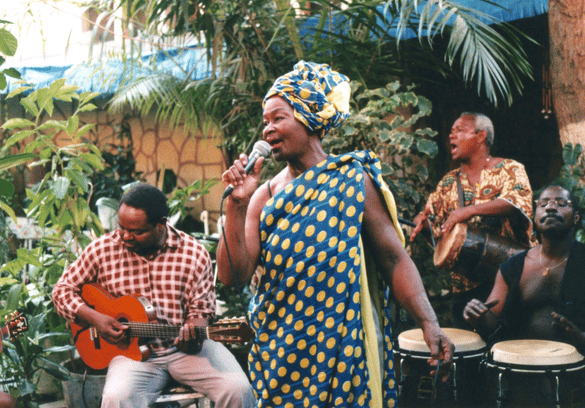
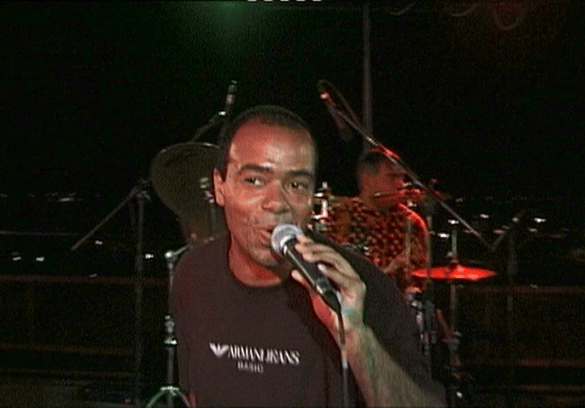
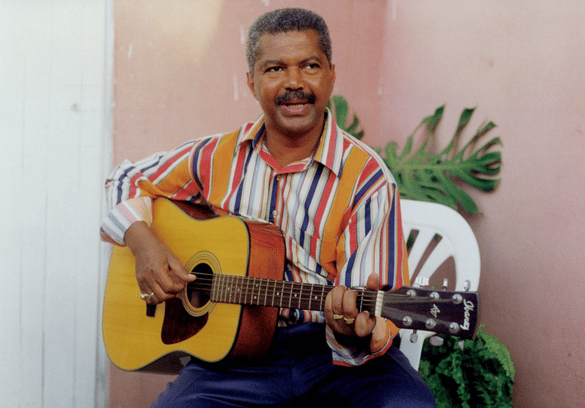
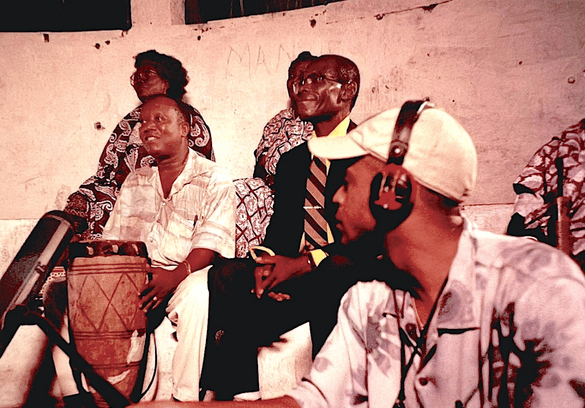
Born in Paris, it was in Portugal that Ariel de Bigault began her career in film with the making of Mulheres em Luta (1977), a documentary filmed on Super 8 that depicts the mobilisation of peasant women, factory workers and domestic workers in the aftermath of the 25 April Revolution. In the following decade, and having already produced, with the support of the Calouste Gulbenkian Foundation, Eduardo e Fernando (1981) and Estão a ver-nos? (1981), she set off for Brazil where she directed Éclats Noirs du Samba (1987), a series that delves into the African roots of some of the country’s most influential musical movements, whilst simultaneously examining the processes of exclusion and discrimination that sought to render Afro-Brazilian communities invisible. Her concern with the cultural landscape – and particularly with the African or Afro-descendant fabric that comprises it – is revisited in Afro Lisboa (1996), a film featuring artists such as General D, Messias Botelho, Antónia Nascimento, Orlando Sérgio, Tony Tavares and Mário Pereira. At the turn of the millennium, she shifted her focus from the Portuguese capital to Luanda with Canta Angola (2000), a feature film shot against a backdrop still marked by civil war, which captures the country’s musical creativity through the hands and voices of some of its most illustrious composers and performers. Back in Portugal, she directed Margem Atlântica (2006), a work in which she revisits Lisbon’s vibrant cultural scene through the testimonies of musicians, writers and actors whose personal and artistic journeys are intertwined, in different ways, with the European and African continents. In 2020, she premiered Fantasmas do Império (2020), a work that combines film excerpts with critical reflections to explore representations of the colonial imagination in 20th-century Portuguese cinema. Alongside her film work, which is largely dedicated to African and Afro-diasporic sounds, Ariel de Bigault has also carried out remarkable work in the promotion and preservation of music, having been responsible for the release of Antologia das Músicas de Cabo Verde 1959-1992 (2 CDs, 1995) and Músicas Urbanas de Angola 1956–1998 (5 CDs, 2000).