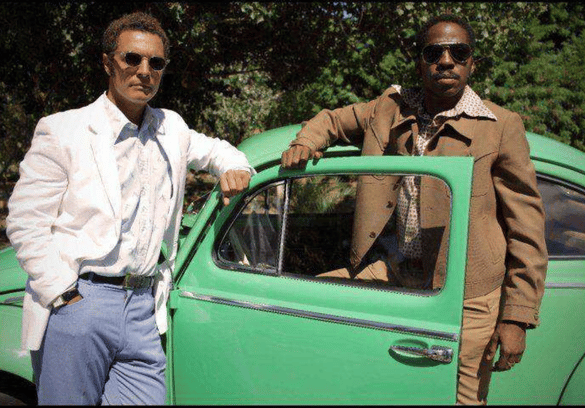
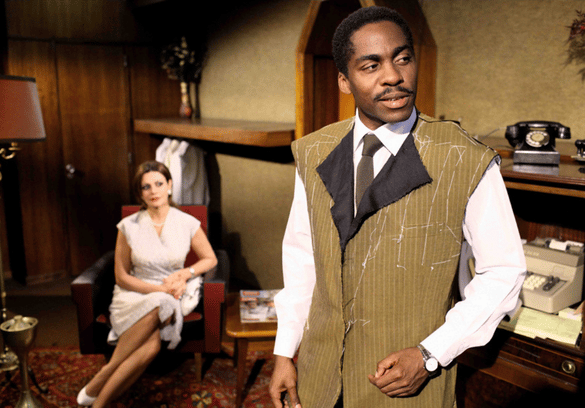
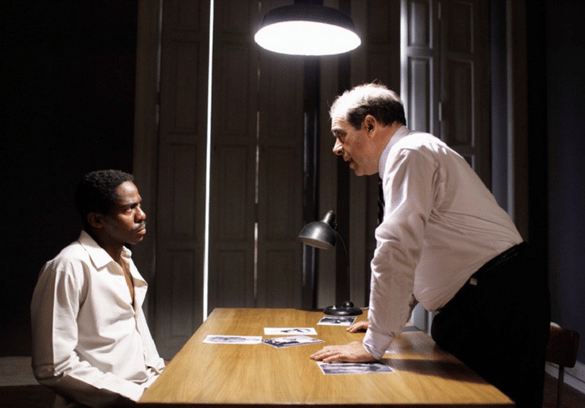
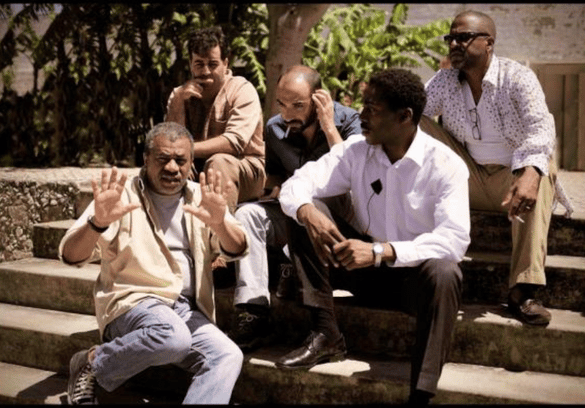
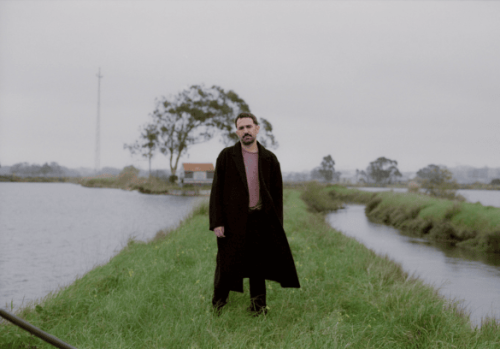
Born in 1955 in the city of Luanda, Zezé Gamboa joined the staff of Radiotelevisão Popular de Angola (RPA) in May 1974; the organisation was renamed Televisão Popular de Angola (TPA) shortly after independence. In the 1980s, after six years directing the news programmes at TPA, he moved to Paris to train as a sound engineer. From then on, he worked in the sound department on films such as Balada da Praia dos Cães (1986) by José Fonseca e Costa and Matar Saudades (1988) by Fernando Lopes. In 1991, he made his directorial debut with Mopiopio (1991), a documentary focusing on Luanda’s music scene during a period of intense civil conflict, which went on to win an award at the renowned Pan-African Film and Television Festival of Ouagadougou (FESPACO). At the same time, he continued his collaboration with other filmmakers, having participated in Passagem por Lisboa (1994) by Eduardo Geada, Terra Estrangeira (1995) by Walter Salles and Daniela Thomas, and O Testamento do Senhor Nepomuceno (1997) by Francisco Manso. In 1998, he returned to directing with Dissidência (1998), a documentary that revisits the theme of war – this time through the testimonies of five former MPLA and UNITA combatants exiled in Europe – and which was selected for the festivals of Cannes, Brussels, Amiens and Zurich. In 2004, he directed his first feature-length fiction film, O Herói (2004), a portrait of the difficulties faced by a civil war veteran who, having been maimed in combat, seeks to reintegrate into a Luanda and an Angola that are themselves in the process of reconstruction. The film earned him more than two dozen awards, notably the Grand Jury Prize at the Sundance Film Festival, cementing the director’s reputation on the international film scene. Eight years later — and after making the short film Bom dia, África (2009) —, he released his second feature film, O Grande Kilapy (2012), whose narrative revolves around Joãozinho das Garotas, a sort of Angolan Don Juan who, by orchestrating a financial scam, challenges the Portuguese colonial regime. The film would go on to win awards at various festivals, confirming the director’s standing achieved in the previous decade. With Tarrafal – Terra Longe (2025), he returns to documentary filmmaking, preserving the memories of the political prisoners who passed through the penal colony founded in 1936 by the Portuguese colonial regime on the island of Santiago. Zezé Gamboa is currently in the process of producing his latest film, Aleluia, also set in the Cape Verdean archipelago.