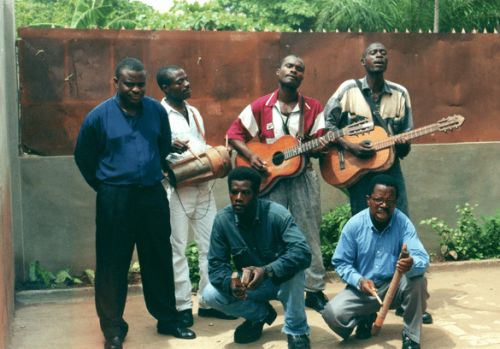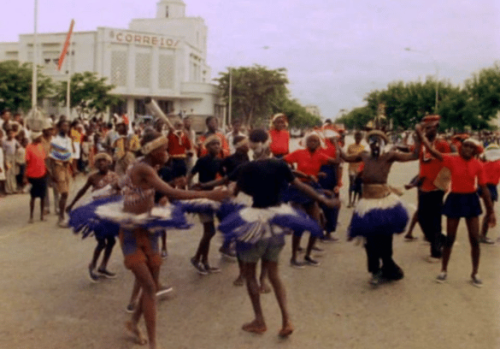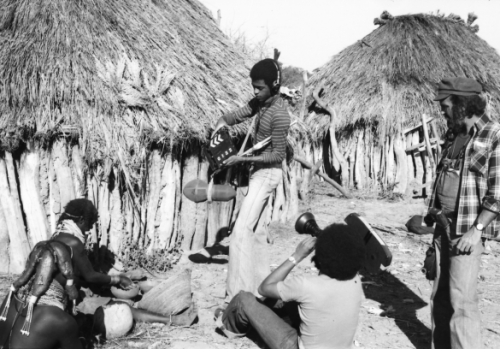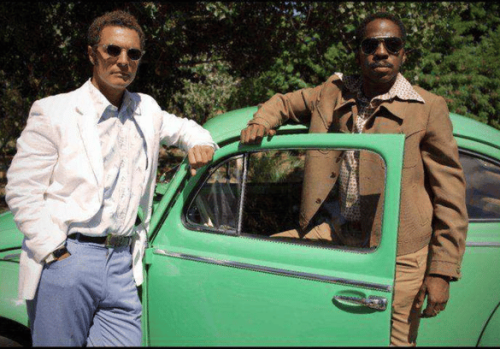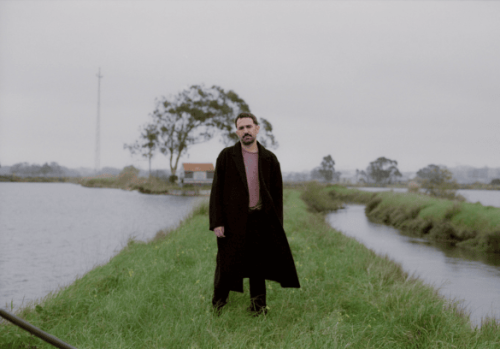
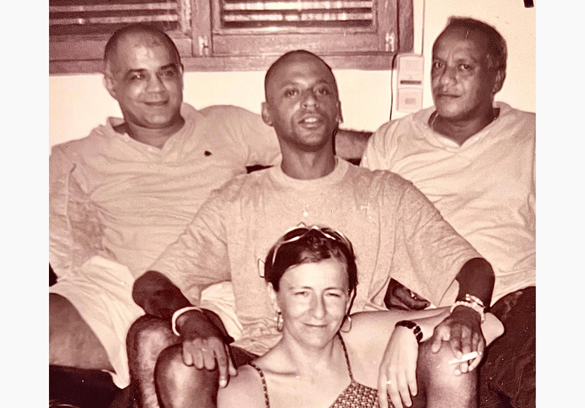
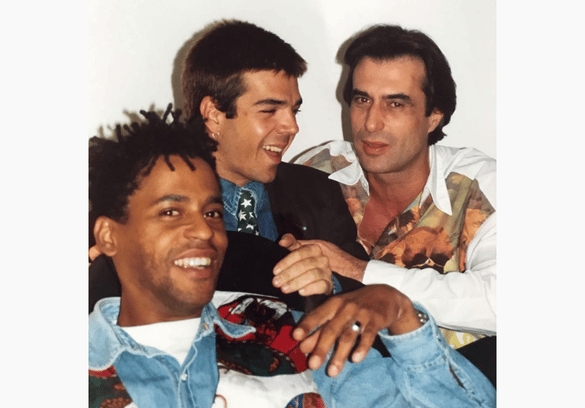
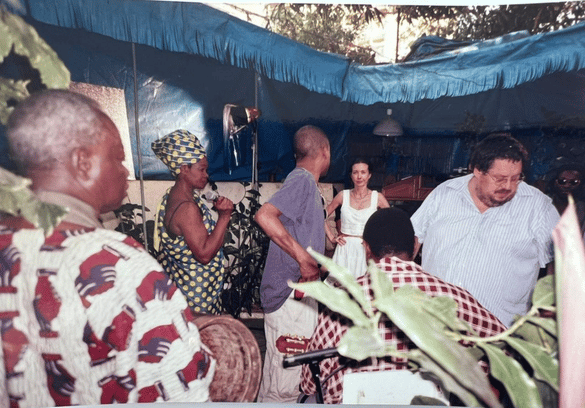
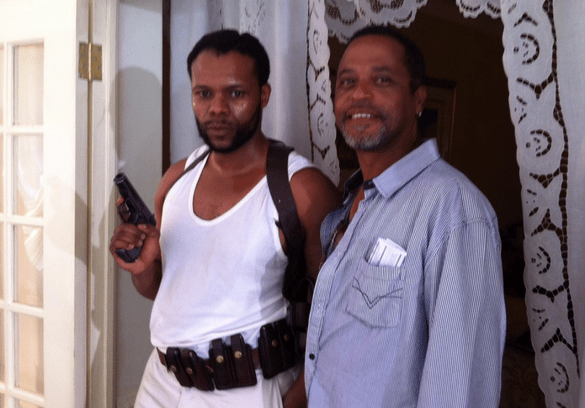
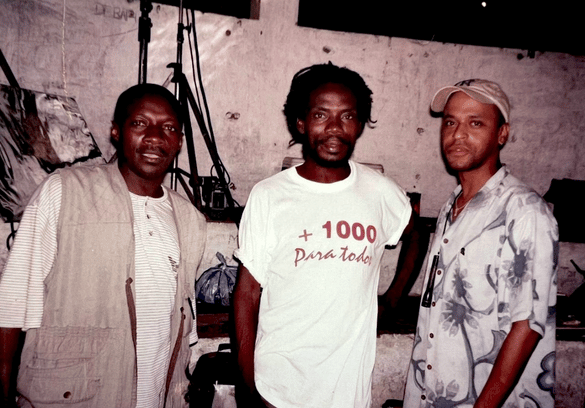
I met Gita Cerveira exactly a year ago when, at the first session of the series Uma Festa Para Viver – on the occasion of the fiftieth anniversary of Angola’s independence, he arrived at ZDB accompanied by Zezé Gamboa, director of Mopiopio (1991) – the film we were screening that day – and his long-time friend. Of course, by that time I was already familiar with his career, but it was, in fact, the first time I had seen, ‘in the flesh’, a figure who had acquired an almost mythical status for me, such was the frequency with which his name appeared in the credits of many of the films that are part of my daily life. In the few hours we spent together, talking about his work with Zezé, Ruy, Ole and others, what struck me most was his easy laugh and the infectious joy with which he recounted the adventures and misadventures of Angolan cinema. Before we parted, we exchanged contact details and agreed on an interview (or a conversation, as he preferred to call it). That conversation never took place, but perhaps this series is another way of beginning it.
∴
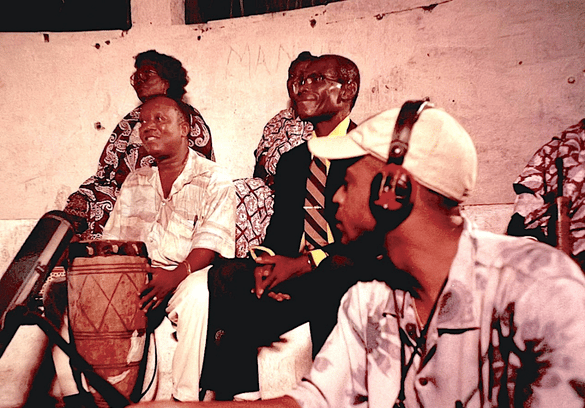
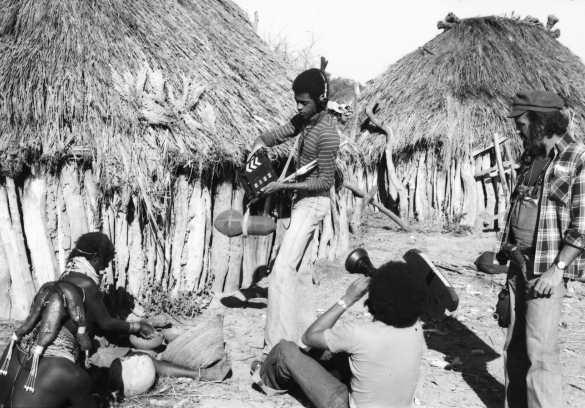
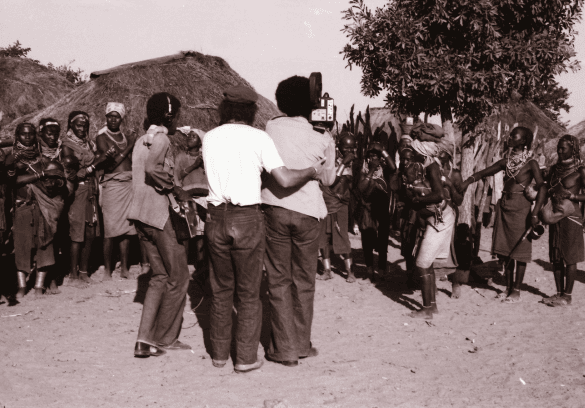
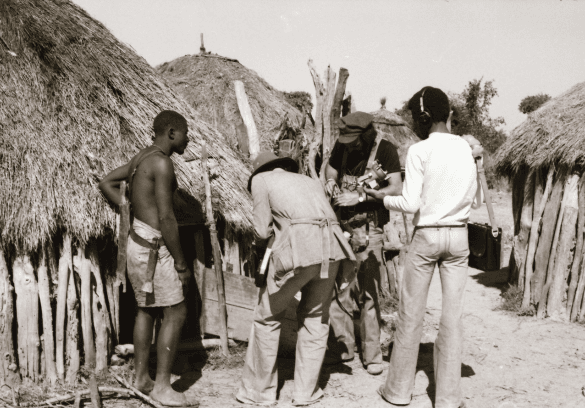
Gita Cerveira was born in Vila Alice on 14 May 1959. In 1975, still very young, he joined the staff of the then fledgling Televisão Popular de Angola (TPA), where he attended a training course led by sound engineer Antoine Bonfanti who, together with Marcel Trillat and Bruno Muel, had travelled to Luanda as part of a cooperation agreement between the French production company Unicité and the Angolan television station. Still in the 1970s, in the newly independent country, he was frequently engaged in recording speeches by political leaders – a photograph printed in the book Angola, The Birth of a Nation (2015), edited by Jorge António and Maria do Carmo Piçarra, shows him, with his Nagra, recording a speech by Agostinho Neto delivered in Ícolo and Bengo. At that time, he also began his film career, taking part in the shooting of A Luta Continua (1977) by Asdrúbal Rebelo and Bruno Muel, Carnaval da Vitória (1978) by António Ole, Leão da Saudade (1978) by Naná, as well as in several episodes of the ten-part series Presente Angolano, Tempo Mumuíla (1979) by Ruy Duarte de Carvalho.
In the 1980s, he travelled to Paris where he completed a course in sound engineering at Neciphone. From that period onwards, his work spread across multiple locations, and he was responsible for the sound in the films Balada da Praia dos Cães (1986) by José Fonseca e Costa, Le trésor des îles chiennes (1990) by F.J. Ossang, O Último Mergulho (1992) by João César Monteiro and The Man Who Drove With Mandela (1998) by Greta Schiller, amongst many others. He was also a regular collaborator with Manoel de Oliveira (O Meu Caso [1986], ‘Non’ ou a Vã Glória de Mandar [1990], A Divina Comédia [1991], O Dia do Desespero [1992]).
At the turn of the millennium, back in Angola, he composed the soundtracks for the feature films Canta Angola (2000) by Ariel de Bigault, Na Cidade Vazia (2004) by Maria João Ganga, Comboio da Canhoca (1989/2004) by Orlando Fortunato and O Herói (2004) by Zezé Gamboa, with whom he would collaborate again on O Grande Kilapy (2012). On the African continent, he also worked on various South African productions, notably Zulu Love Letter (2004) by Ramadan Suleman, Nelson Mandela: The Myth and Me (2013) by Khalo Matabane, Impunity (2014) by Jyoti Mistry and Mandela’s Gun (2016) by John Irvin. In Mozambique, he has worked on the films Virgem Margarida (2012) by Licínio de Azevedo, AvóDezanove e o Segredo do Soviético (2019) by João Ribeiro, and O Ancoradouro do Tempo (2024) by Sol de Carvalho. In the Cape Verde Islands, he participated in the sound design for Tarrafal – Terra Longe (2025) by Zezé Gamboa and Aleluia, the director’s latest film, still in production at the time of this programme.
The physical passing of the most internationally renowned of Angolan technicians – whose career earned him a tribute at the first edition of DOCLuanda, as well as the Signis Award and the Sophia Award – leaves a void impossible to fill in the contemporary cinematic landscape. Without losing sight of the transnational dimension of his work, À Escuta de Angola com Gita Cerveira proposes revisiting part of the filmography produced in and about the country of his birth, highlighting his journey through various productive phases of national cinema and a body of work indelibly marked by the mastery that – in sound recording, direction or mixing – he always knew how to instil in the works he helped shape.
Sofia Afonso Lopes
*We would like to express our gratitude to all the filmmakers who have given their permission for their films to be screened, as well as to Agência Nacional das Indústrias Culturais e Criativas (ANICC) and to Cinemateca Portuguesa – Museu do Cinema for their collaboration on this programme. We would also like to thank Gita’s family and friends for hosting this tribute and for the indispensable help they provided in bringing it to fruition.