ZDB

Cinema

Ofícios ⟡ Makumukas

— Session #3 À escuta de Angola com Gita Cerveira

Thu16.07.2607:00PM
Galeria Zé dos Bois


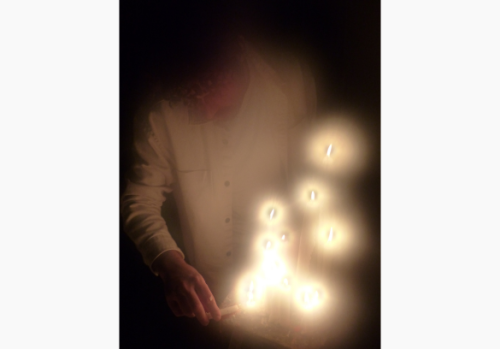
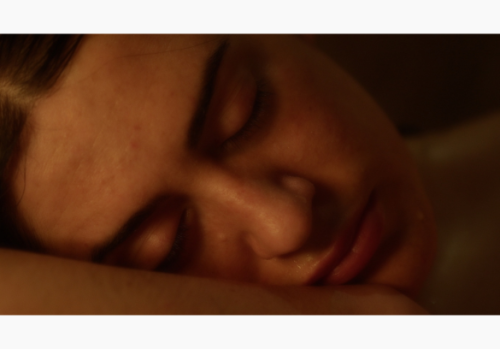
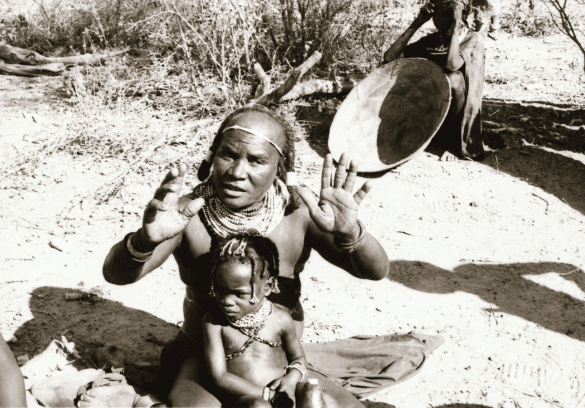
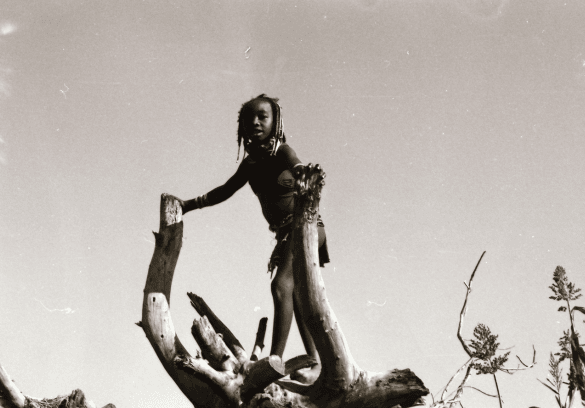
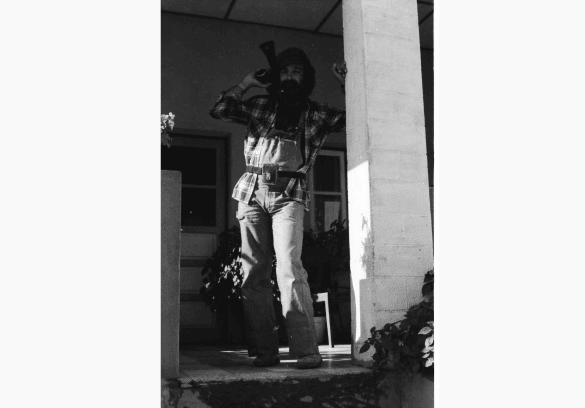
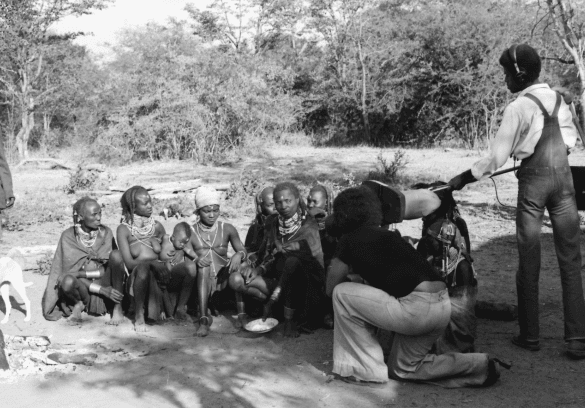
Photograph by Rute Magalhães taken during the filming of 'Presente Angolano, Tempo Mumuíla' (1979).
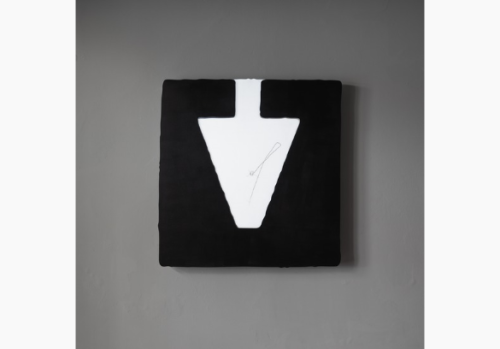
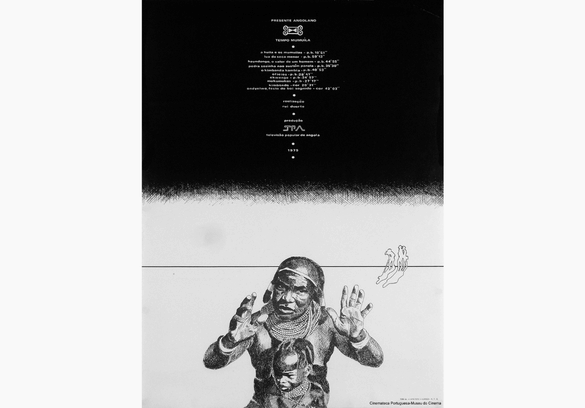
Poster for ‘Presente Angolano, Tempo Mumuíla’ (1979), designed by Ruy Duarte de Carvalho based on a photograph by Rute Magalhães.
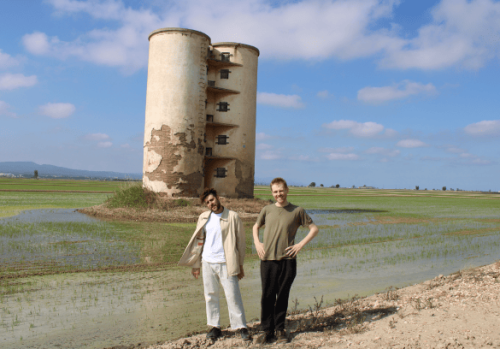
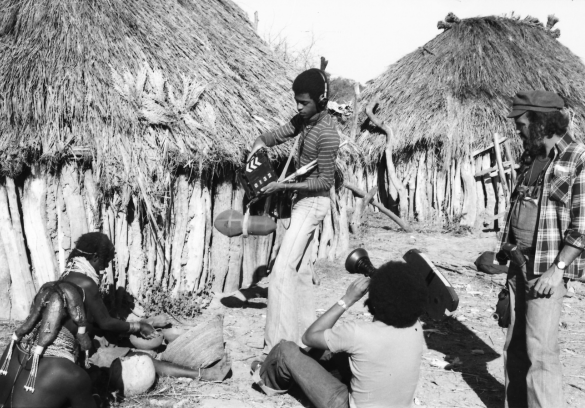
Ruy Duarte and the crew during the filming of 'Presente Angolano, Tempo Mumuíla' (1979). Photograph by Rute Magalhães.

Session #3 of the film cycle À escuta de Angola com Gita Cerveira programmed by Sofia Afonso Lopes.

All sessions take place on Thursdays at 7PM at ZDB.

Ofícios (1979) and Makumukas (1979) by Ruy Duarte de Carvalho
(Doc., 29′ e Doc., 27′, respectively)
The screening will be followed by a conversation with Rute Magalhães, a photographer who documented the shooting of the films and who will present a selection of images taken during that time.

Filmed in Chibia in June 1977, Ofícios (1979) and Makumukas (1979) form part of the series Presente Angolano, Tempo Mumuíla (1979), comprising ten documentaries.

As the title suggests, Ofícios depicts the practice of specialised roles within Ovamwhila society – potter, blacksmith, kimbanda practitioner and hairdresser – the acquisition of which is only possible through the intervention of a ‘lineage’ spirit, that is, one belonging to a deceased family member.

Filmed over eight consecutive hours, Makumukas records the initiation rite of a woman into the cult of a spirit ‘foreign’ to the community, in this case that of a mukubal belonging to the neighbouring ovaherero group.

Despite drawing on anthropology – a discipline he employs to properly document, address and highlight elements belonging to a sociocultural context distinct from his own – Carvalho has always been opposed to classifying these works as ethnographic: “It is documentary cinema about the everyday lives of my fellow citizens. These are people living within a specific context, and that is how it was filmed.” Produced at a time when the director turns his attention to the south of the country and to the populations inhabiting the Huíla plateau, these films attest to the vitality of his visual and political project which, from the outset, has shifted its focus away from the nation, investing in forms of cinema that emerge from the margins.
(Sofia Afonso Lopes)

Rute Magalhães

Rute Magalhães was born in Porto in 1944, but it was in Malanje that she spent her childhood and part of her adolescence before moving to Lubango to continue her studies at Colégio Paula Frassinetti. In the 1960s, she moved to Lisbon to study Chemical Engineering at the Instituto Superior Técnico. In the capital, she joined the editorial and cultural sections of the Casa dos Estudantes do Império, an organisation founded by the Estado Novo regime with the aim of accommodating university students from the then Portuguese colonies, which, contrary to the regime’s intentions, became a hub for anti-colonial and pro-independence mobilisation. Before the institution closed in 1965, she even translated MPLA statements that were then smuggled to Angola in shoe boxes. In 1968, she was arrested by the PIDE on suspicion of ‘subversive activities’, and held in Caxias for two weeks. In 1974, having completed her degree in History at the Faculty of Arts of the University of Lisbon, she returned to Angola, where she went on to work at the Secretariat of State for Education and Culture and, subsequently, at the Centre for Pedagogical Research and School Inspection (CIPIE), where she worked on the preparation of textbooks and other teaching materials for the subject of History. In 1977, she accompanied Ruy Duarte de Carvalho on the filming of the ten-part series Presente Angolano, Tempo Mumuíla (1979) in the south of the country, producing, during that period, a body of photographic work which – in addition to having served as the basis for some of Carvalho’s drawings – would, years later, be exhibited by the author, in a gesture of revisitation motivated, as she describes it, by “the resonance that ‘being Mumuíla’ still has in me today”. Regarding these photographs, the anthropologist and curator Nuno Porto would write that they are “slow, candid, full of detail, of events that unfolded until the composition of each image and then, independently of it, continued”. She subsequently attended the Centre d’Études Africaines at the University of Paris I – Sorbonne, where she developed a project on the African press published in Portugal. In this context, and within a particularly fertile academic environment, she crossed paths with researchers such as Jean Devisse and Alfredo Margarido, leading figures in the field of African studies. Back in Lisbon, she completed a course in photography and another in ceramics at Ar.Co. Since then, she has been pursuing a regular artistic practice, presenting her work in various exhibitions.

Related Programme

Next Events

I accept
By using this website you agree to the use of cookies in accordance with our privacy policy.