Born in Luanda in 1951, António Ole developed an interest in the arts from an early age. It was during the time he lived in Maiorca—a Portuguese village where his paternal grandparents were from and where he completed his first three years of elementary school—that he began drawing, under the guidance of an aunt who had a degree in Fine Arts. Upon his return to Angola—where, after completing the fourth grade, he attended the Salvador Correia High School—he was introduced to Cubist aesthetics and, in particular, to the works of Pablo Picasso, Georges Braque, Paul Klee, and Fernand Léger, through Eduardo Zink, a visual artist and his drawing teacher. In 1967, at just sixteen years old, he took his first steps in the art world by participating in group exhibitions. The following year, he held his first solo exhibition, which clearly revealed the influence of Pop Art and comic books on his work. In 1970, on the occasion of his participation in the 4th Luanda Modern Art Salon, he was awarded the Acquisition Prize. Shortly thereafter, and after completing high school, he returned to Portugal, this time heading to Lisbon with the intention of enrolling in the architecture program at the School of Fine Arts. Faced with the sociopolitical situation in the then-metropolis—where student revolts and protests were multiplying, leading to the closure of the institution—he eventually returned to Angola, where he nevertheless maintained a keen interest in architecture. In Luanda, he worked with professionals in the field such as José Deodoro Troufa and Vasco Real, with whom he joined forces to pressure the colonial authorities to establish a school of architecture in the capital—an aspiration that was only realized after the territory gained independence.
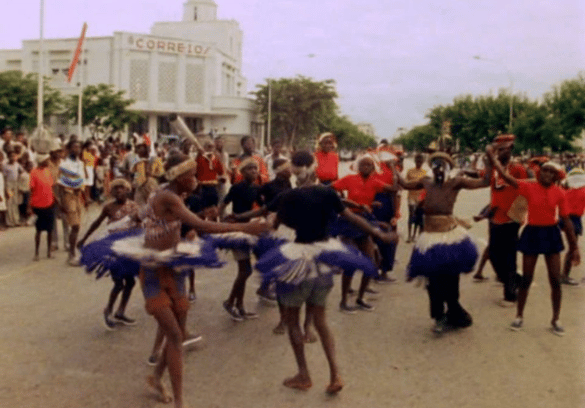
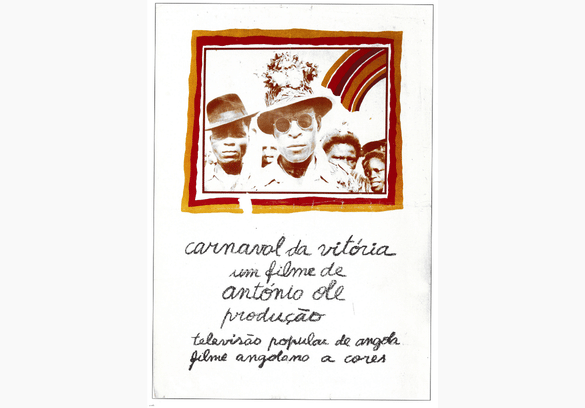
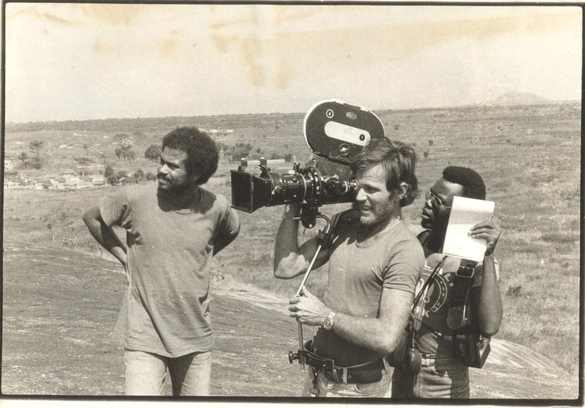
In 1975, he began his career in film, joining the staff of Televisão Popular de Angola (TPA), which was headed at the time by Luandino Vieira. It was at this organization that he made his first films, including Ferroviários do Caminho de Ferro de Malanje (1975)—a short film part of the collective series Sou Angolano, Trabalho com Força—and Resistência Popular em Benguela (1975), and Aprender Para Melhor Servir (1976)—works strongly influenced by the filmmaker’s interest in the processes of political and social transformation in the post-independence era. In 1977, he released FESTAC (1977), a documentary produced as part of the Second World Festival of Black and African Arts and Cultures, held in Nigeria. The following year, he directed Carnaval da Vitória (1978), an audiovisual work documenting the first Carnival celebrations in independent Angola, and O Ritmo do Ngola Ritmos (1978), a feature-length film depicting the role of the musical group Ngola Ritmos in the clandestine anti-colonial struggle, as well as its contribution to the development of Angolan popular music. The prominence given to Liceu Vieira Dias, one of the group’s founders and a well-known sympathizer of “Revolta Activa,” led to the film’s censorship; it remained banned for eleven years. Despite the ban on screening the film—an episode he describes in great detail in an interview with Isabel Carlos—Ole continued his cinematic journey with the release of No Caminho das Estrelas (1980) and Conceição Tchiambula, Um Dia, Uma Vida (1982). It is important to note that his entire filmography predates his formal film education. In fact, it was only after directing Conceição Tchiambula that he studied film, first in the Department of African American Studies at UCLA and later at the American Film Institute’s Center for Advanced Studies—a period during which he shot the footage for New Orleans, Mardi Gras, which remains unfinished. Upon returning to Angola, he found himself confronted with the near-total paralysis of the film industry, yet he still directed Sonangol, 10 Anos Mais Forte (1987). He then devoted himself full-time to painting, photography, sculpture, and installation art—fields in which he would establish one of the most significant artistic careers of the contemporary era. From then on, his work circulated through some of the most prestigious art circuits, featuring at the Venice Biennale and Documenta and being exhibited at institutions such as the Museum of Modern Art (MoMA) and the Tate Modern, among others. As early as 1985, Ruy Duarte wrote: “I believe that António Ole, with his painting, is the one leading the way.” Four decades later, we can only confirm the accuracy of that intuition.
Sofia Afonso Lopes